
Slow Heart Rate (Bradycardia)
Slow Heart Rate (Bradycardia): A Complete Patient Guide
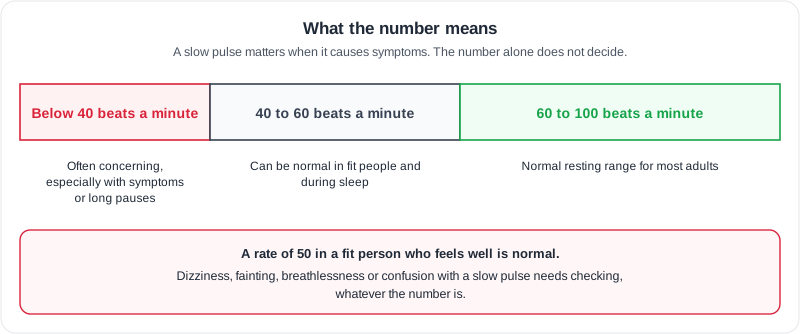
Bradycardia means a slow heart rate, usually defined as a resting heart rate below 60 beats per minute. A slow heart rate is not always a problem: it is normal in fit, athletic people and during sleep. It becomes a medical concern when the heart is too slow to supply the body with enough blood, causing dizziness, fainting, fatigue or breathlessness.
Bradycardia arises when the heart’s natural pacemaker (the sinus node) fires too slowly, as in sinus bradycardia or sick sinus syndrome, or when electrical signals are delayed or blocked on their way from the upper to the lower chambers, called atrioventricular (AV) block. AV block ranges from first-degree (usually harmless) to third-degree, or complete, heart block, which usually needs a pacemaker.
Bradycardia becomes more common with age, as the heart’s electrical system wears. It may also be caused by medicines, other medical conditions and sometimes a reversible problem. The 2021 ESC guideline on cardiac pacing sets out when a pacemaker is recommended: treatment depends on whether the slow rate is causing symptoms and on its cause rather than on the number alone.
A slow heart rate may cause no symptoms. When symptoms occur, they result from too little blood flow reaching the brain and body.

Common symptoms
Dizziness or light-headedness, particularly on standing or exertion
Fainting or near-fainting (syncope)
Unusual tiredness and reduced exercise ability
Shortness of breath and chest discomfort
Other symptoms
Confusion, difficulty concentrating or memory problems (particularly in older people)
Palpitations, caused by pauses or irregular beats, and sometimes fast beats alternating with slow ones (tachy-brady syndrome)
When a slow pulse is normal
Resting heart rates of 40 to 60 are common in athletes and during sleep, and are not a problem if you feel well. The number alone is not the issue; symptoms are.
Causes depend on whether the problem lies in the heart’s natural pacemaker or in conduction between the chambers.

Heart-related causes
Age-related wear of the sinus node and conduction system, the commonest cause
Coronary artery disease or a previous heart attack, particularly of the inferior wall
Heart valve disease, cardiomyopathy, myocarditis and infiltrative disease such as amyloidosis and sarcoidosis
Complications of heart surgery or procedures
Inherited conduction disease
Medicines
Beta-blockers, some calcium channel blockers (verapamil, diltiazem), digoxin, amiodarone and other antiarrhythmics, and some other medicines can slow the heart. Reducing or stopping them (with medical advice) may resolve it.
Other causes
Underactive thyroid
High potassium, and other electrolyte disturbances
Obstructive sleep apnoea and raised pressure in the brain
Lyme disease and other infections
High vagal tone, as in athletes and during sleep
A slow pulse with symptoms should be assessed, particularly if you have fainted.
Arrange a prompt assessment if you have:
A slow pulse with dizziness, tiredness, breathlessness or reduced stamina
Episodes of near-fainting or pauses in the heartbeat noticed on a smartwatch or monitor
Confusion or reduced exercise tolerance in later life
A slow heart rate after starting or increasing a heart or blood pressure medicine
Known bradycardia or a pacemaker with new symptoms
Call 999 immediately if you have:
Fainting or collapse
Chest pain or pressure, particularly with breathlessness or sweating
Severe breathlessness, or confusion with a very slow pulse
The key to diagnosis is correlating symptoms with the heart rhythm, and finding the cause.

1. ECG
A 12-lead ECG shows the rate and identifies sinus bradycardia, pauses or the type and degree of AV block. Expert reporting matters, since the pattern guides treatment.
2. Rhythm monitoring
Because bradycardia can be intermittent, cardiac monitoring over days to weeks captures episodes and shows whether symptoms occur with slow rhythm or pauses.
3. Exercise test
An exercise ECG shows whether the heart rate rises appropriately with activity (chronotropic competence) and whether AV block worsens or improves.
4. Blood tests and echocardiogram
Thyroid function, electrolytes, blood count and inflammatory markers are checked, with an echocardiogram for structural heart disease. A medicines review is essential.
5. Further tests
Sleep studies, cardiac MRI or an implantable loop recorder may be needed in selected people. Tilt-table testing can help when fainting has no clear explanation.
Treatment depends on symptoms and cause. People with no symptoms and a benign rhythm usually need no treatment.

Treat reversible causes
Review medicines that slow the heart, and adjust or change them with medical advice
Correct thyroid disease and electrolyte problems
Treat sleep apnoea, which can cause nocturnal pauses
Pacemakers
A permanent pacemaker is recommended for symptomatic sinus node disease when symptoms are clearly linked to slow rates, and for second-degree (Mobitz II) or complete heart block, even when symptoms are mild
A pacemaker is a small device placed under the skin below the collarbone, with wires to the heart, usually under local anaesthetic and taking 1 to 2 hours
Modern options include dual-chamber pacemakers and, in some people, conduction system pacing and leadless pacemakers
Emergency treatment
For a very slow rate causing collapse, atropine, adrenaline or temporary pacing may be used in hospital.
What does not need a pacemaker
A slow heart rate in a fit person, a first-degree AV block, and asymptomatic sinus bradycardia are usually left alone.
Do not stop heart or blood pressure medicines suddenly. Discuss changes with your doctor.
Learn to check your pulse, and keep a diary of symptoms and readings.
Rise slowly from sitting or lying and stay hydrated if you get light-headed.
After a pacemaker: avoid heavy lifting with the affected arm for a short period as advised, attend device checks (usually yearly) and carry your device card.
Pacemakers and everyday life: household appliances and mobile phones are safe. Keep magnets and phones a few centimetres from the device, and tell staff before MRI scans or surgery.
Driving: DVLA rules apply after fainting and after pacemaker implantation. Discuss with your cardiologist.
Support is available from the Arrhythmia Alliance and the British Heart Foundation.
Bradycardia in a fit person, or a mild slow rate without symptoms, has an excellent outlook and usually needs no treatment.
When bradycardia is symptomatic, a pacemaker treats symptoms very effectively, and most people feel considerably better.
Complete heart block untreated can be life-threatening, but a pacemaker gives a normal or near-normal life expectancy in most people.
Outlook depends on the cause and any underlying heart disease.
Pacemakers need periodic checks and battery replacement every 8 to 12 years or so.
Bradycardia means a slow heart rate, usually below 60 beats per minute.
A slow rate is normal in fit people and during sleep, and only a problem if it causes symptoms.
Symptoms include dizziness, fainting, fatigue and breathlessness.
Causes include age-related wear, medicines, thyroid disease, sleep apnoea and heart disease.
Diagnosis needs an ECG and rhythm monitoring to link symptoms with a slow rate.
Reversible causes, especially medicines, should be addressed first.
A pacemaker is recommended for symptomatic sinus node disease or high-grade AV block.
Pacemaker implantation is a short, safe procedure with excellent results.
Guidelines and sources
This page follows current European guidance:
Glikson M et al. 2021 ESC Guidelines on cardiac pacing and cardiac resynchronization therapy. European Heart Journal 2021;42:3427-3520.
DVLA: Cardiovascular disorders: assessing fitness to drive (GOV.UK).
These are the questions patients most often ask about a slow heart rate.
What is a dangerously slow heart rate?
There is no single number. A rate under 40, long pauses, or a slow rate with fainting, confusion or chest pain is concerning. A rate of 50 in a fit person who feels well is normal.
What causes a slow heart rate?
Age-related wear of the heart’s pacemaker or wiring, medicines such as beta-blockers, thyroid disease, sleep apnoea, heart disease, and a high level of fitness.
What are the symptoms of bradycardia?
Dizziness, fainting or near-fainting, fatigue, breathlessness and confusion. Many people have no symptoms.
Is a heart rate of 50 normal?
It can be, particularly in athletes, during sleep or when taking beta-blockers, if you feel well. If you have dizziness, fainting or breathlessness, it should be checked.
When do I need a pacemaker?
When a slow rate or heart block is causing symptoms that are clearly linked to it, or when you have high-grade AV block (Mobitz II or complete heart block), even without symptoms. Reversible causes are treated first.
How is bradycardia diagnosed?
By an ECG and heart rhythm monitoring that captures the slow rate or pauses during symptoms, with blood tests and an echocardiogram to look for causes.
Can a slow heart rate be caused by medicines?
Yes. Beta-blockers, verapamil, diltiazem, digoxin and amiodarone are common causes. Do not stop them without medical advice, because your doctor may be able to adjust the dose or choose an alternative.
Is a pacemaker operation safe?
Yes. It is a short procedure, usually under local anaesthetic, with a low risk of complications. Most people return to normal activity quickly and feel better.
Can I have a private assessment for a slow heart rate or dizziness?
Yes. A telephone, video or face-to-face consultation in Peterborough or Corby can review your symptoms, with ECG reporting, cardiac monitoring and echocardiography arranged as needed.
- Is my slow heart rate normal for me, or causing my symptoms?
- Which type of bradycardia or heart block do I have?
- Could my medicines be responsible, and can they be changed?
- Do I need rhythm monitoring or further tests?
- Do I need a pacemaker, and which type?
- What are the risks and benefits of a pacemaker?
- What should I do if I feel faint?
- Is it safe for me to exercise, drive and fly?
- What happens if I do nothing and my heart rate stays slow?
- How often will I be reviewed, and will my pacemaker be checked?

The heart’s electrical system
Sinus node: the natural pacemaker in the upper right chamber starts each heartbeat.
AV node: passes the signal to the lower chambers after a short delay.
Sinus bradycardia or sick sinus syndrome: the sinus node fires too slowly or pauses.
AV block: the signal is delayed (first degree), intermittently blocked (second degree) or completely blocked (third degree), when the lower chambers beat on their own slow escape rhythm.
Pacemaker: a device senses the heart and adds a beat when it is too slow.
If you have a slow pulse with dizziness, fainting or tiredness, you may benefit from a telephone consultation or video consultation, or a face-to-face consultation in Peterborough or Corby for a more comprehensive assessment.
Investigations such as ECG, cardiac monitoring and exercise ECG may be recommended.
Book Your Heart Health Check Today
Personalised care
Your history, tests and questions are reviewed so the advice fits you.

Consultant-led care
Seen and assessed by a consultant cardiologist.

Clear
next steps
A written letter with your findings and next steps.
Advanced
diagnostics
Specialist in echo, stress echo, cardiac CT, MRI and heart failure.
Medically reviewed by Dr Salam Salloum, Consultant Cardiologist. Last updated: . This page is for general information and does not replace personal medical advice.